Dermal Fillers
Structural facial balancing & restoration
A medically led approach to facial rejuvenation, balance, and structural enhancement using advanced hyaluronic acid dermal fillers.

What are dermal fillers?
Dermal fillers are injectable hyaluronic acid gels designed to restore structural support, improve facial balance, and replace volume lost over time.
Hyaluronic acid is a substance naturally found within the skin and soft tissue, playing an important role in hydration, support, and overall facial structure.
As we age, bone density, fat distribution, collagen, and soft tissue support gradually decline. This contributes to volume loss, facial heaviness, hollowing, reduced definition, and changes in facial proportions over time.
Dermal fillers allow us to restore support strategically within the face, helping to improve balance, structure, contour, and overall facial harmony while maintaining natural movement and expression.
Our approach to filler
At The Look by Louise, filler is approached conservatively, structurally, and with long-term facial harmony in mind.
Our focus is not simply on adding volume, but on understanding how the face ages anatomically and how subtle structural support can improve overall balance and proportion.
Every treatment plan is tailored individually based on facial anatomy, tissue quality, movement, profile balance, and long-term aesthetic goals.
We prioritise natural-looking outcomes, facial integrity, and treatments that enhance rather than overpower the face.
Treatment Areas
-
The midface plays a major role in overall facial structure, support, and balance. Over time, age-related changes within bone, fat pads, collagen, and ligament support can lead to flattening through the cheeks, reduced structural support, and increased heaviness through the lower face.
Cheek enhancement focuses on restoring support strategically within the midface using hyaluronic acid filler placed at carefully selected anatomical points.
By improving structural projection and support through the cheeks, we are often able to indirectly improve other areas of the face, including softening nasolabial folds, reducing lower face heaviness, and improving overall facial contour.
Treatment can be performed for both age-related volume restoration and facial balancing purposes, depending on individual anatomy and treatment goals.
-
The chin plays a critical role in lower face balance, profile harmony, and overall facial proportions.
A recessed or under-projected chin can affect the relationship between the nose, lips, jawline, and neck, often making the lower face appear less defined structurally.
Chin filler works by improving projection, support, and lower face proportions using strategically placed hyaluronic acid filler.
Treatment can help strengthen profile balance, improve lower facial harmony, support jawline definition, and create a more proportionate transition between facial features.
Careful anatomical assessment is essential, as even subtle adjustments to chin projection can significantly influence overall facial balance.
-
Jawline definition is heavily influenced by bone structure, soft tissue support, skin quality, and age-related collagen decline.
Over time, the lower face can become softer and less defined due to structural changes within both the skin and deeper supporting tissues.
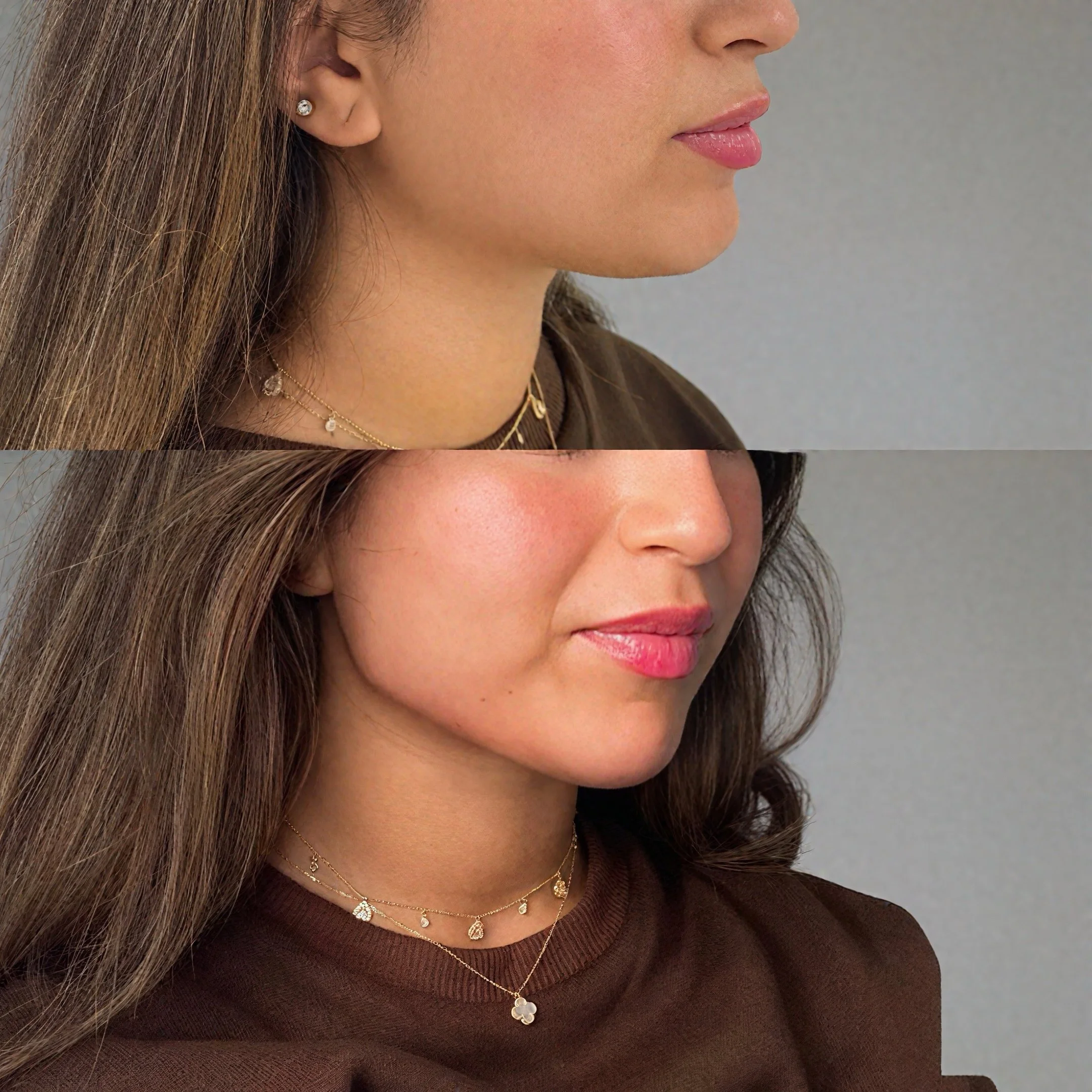
Jawline filler works by restoring contour and structural support along the mandibular line using carefully placed hyaluronic acid filler.
Treatment can improve lower face definition, strengthen facial shape, and create improved separation between the jawline and neck.
In some patients, jawline enhancement is performed primarily for contouring and facial balancing, while in others it forms part of a wider age-related rejuvenation approach.
-
The tear trough is one of the most anatomically delicate areas of the face and requires careful patient selection and advanced understanding of periorbital anatomy.
Volume loss and structural changes beneath the eyes can create hollowing, shadowing, and a tired appearance, often becoming more noticeable with ageing.
Tear trough filler is designed to improve this transition between the lower eyelid and upper cheek by carefully restoring support within the area.
Because under-eye concerns are not always caused purely by volume loss, detailed assessment is essential prior to treatment. Factors such as skin quality, puffiness, fluid retention, fat prolapse, and overall facial structure must all be considered carefully.
For suitable patients, treatment can create a softer, fresher, and less fatigued appearance while maintaining natural movement and anatomical integrity.
-
Midface ageing involves progressive structural decline across multiple tissue layers, including bone resorption, fat pad descent, collagen loss, and reduced ligament support.
This contributes to flattening through the cheeks, deepening folds, facial heaviness, and overall loss of facial support over time.
Midface rejuvenation focuses on restoring structural support throughout the central face in a way that improves overall facial architecture rather than simply replacing isolated volume.
By strategically supporting the midface, we are often able to improve multiple ageing concerns simultaneously while maintaining natural facial proportions and movement.
-
The temples are an important but often overlooked component of facial structure and upper face balance.
Age-related volume loss within the temporal region can contribute to hollowing, skeletal appearance, reduced upper facial support, and overall facial ageing.
Temple filler works by restoring soft tissue support within this area, helping create smoother facial transitions and improved upper face harmony.
Because of the vascular anatomy within the temple region, advanced anatomical understanding and careful injection technique are essential.
-
Horizontal neck lines develop due to a combination of repetitive movement, collagen decline, skin thinning, and progressive loss of structural support within the skin.
Carefully placed hyaluronic acid filler can help soften these etched lines while improving hydration and support within the tissue.
Treatment is often combined with collagen-stimulating procedures where more advanced skin laxity or textural change is also present.
-
Nasolabial folds are often one of the most misunderstood areas within facial ageing.
In many patients, the fold itself is not the primary issue, but rather the result of progressive volume loss and structural decline higher within the face.
As midface support weakens over time, tissue descent and facial heaviness contribute to deepening of the fold between the nose and mouth.
For this reason, treatment often focuses first on restoring structural support through surrounding areas such as the cheeks and midface before directly treating the fold itself.
This allows for a softer, more natural correction while avoiding unnecessary heaviness or overfilling within the lower face.
-
Marionette lines develop as structural support within the lower face gradually declines over time.
Volume loss, ligament weakening, collagen reduction, and tissue descent all contribute to shadowing and downward heaviness beside the mouth.
Treatment focuses on restoring support strategically within the lower face while improving balance between surrounding structures.
Rather than simply filling individual lines, treatment is approached through broader facial assessment to ensure results remain natural, balanced, and structurally appropriate.
-
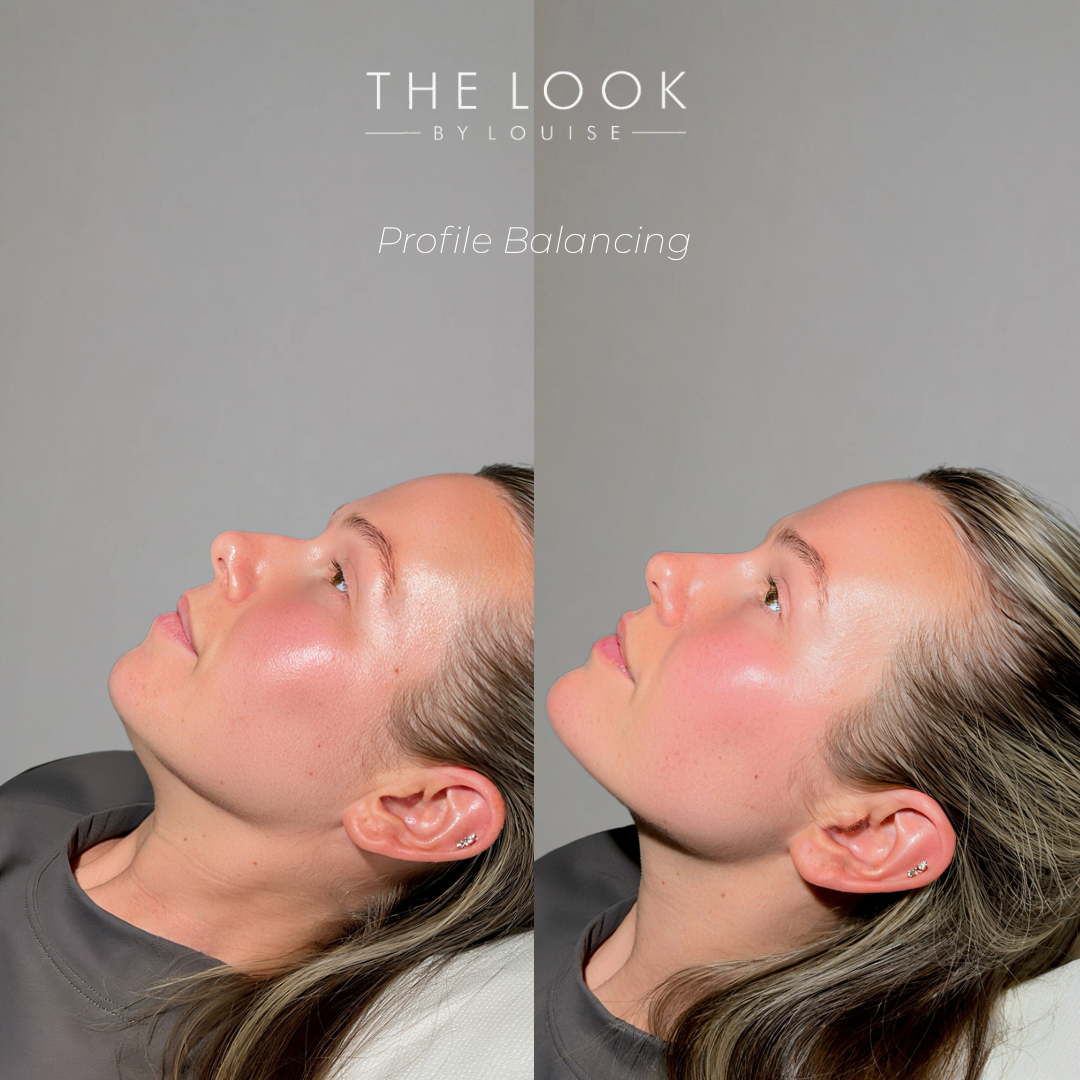
Profile balancing is an advanced facial assessment approach focused on improving overall side profile harmony rather than treating isolated features independently.
Small imbalances between the chin, lips, nose, and jawline can significantly affect overall facial proportions and how the profile is perceived aesthetically.
Through strategic treatment planning, we are able to improve structural balance between these areas while maintaining natural facial proportions and movement.
Profile balancing commonly combines treatments such as chin enhancement, lip enhancement, jawline definition, and non-surgical rhinoplasty depending on individual anatomy and treatment goals.

Why consultation matters
Facial aesthetics should never be approached through a one-size-fits-all treatment plan.
Factors such as anatomy, facial proportions, tissue support, previous filler history, movement, skin quality, and ageing patterns all influence which treatments are appropriate and how filler should be placed safely.
Detailed consultation and assessment are therefore an essential part of achieving natural, balanced, and medically responsible results.

Frequently Asked Questions
-
Longevity varies depending on the treatment area, metabolism, product used, and individual tissue behaviour.
Most fillers last between 6–18 months depending on the area treated.
-
Yes. Hyaluronic acid fillers can be dissolved using an enzyme called hyaluronidase where clinically appropriate.
-
This depends entirely on facial anatomy, treatment area, tissue quality, and treatment goals.
Treatment is always tailored individually rather than based on fixed amounts.
-
Yes, however previous filler history must always be assessed carefully before further treatment is carried out.
In some cases, dissolving or corrective treatment may be recommended prior to additional filler placement.
-
Most patients experience some temporary swelling, tenderness, redness, and occasional bruising following treatment.
The degree of downtime varies depending on the area treated, individual healing response, and the amount of product placed.
Areas such as the lips and tear troughs can swell more significantly initially, while structural areas such as the cheeks, chin, and jawline often settle more gradually over several days.
Although many patients return to normal activities shortly afterwards, it is important to understand that filler results are not immediate “final results” on the day of treatment. The tissue requires time to settle, integrate, and fully stabilise.
Detailed aftercare guidance is provided following treatment to support healing and optimise overall outcome.
-
Consultations can be booked directly through our website.
We require a £100 deposit to secure all injectable consultations. Should you decide to proceed with treatment on the day, this amount is deducted from the overall treatment cost.
When booking your appointment, sufficient time is allocated for both consultation and treatment where appropriate, allowing treatment to be carried out on the same day should you wish to proceed following assessment.
This allows us to fully assess facial anatomy, discuss treatment suitability and goals in detail, and create an appropriate treatment plan before proceeding safely and responsibly.
-
A consultation is recommended — particularly if you are a new client to the clinic.
We believe injectable treatment should be approached properly and never rushed, which is why we like to allow time to fully assess your facial anatomy, discuss your goals, review previous treatment history, and create an appropriate treatment plan tailored to you.
Consultations are also important where clients are unsure which treatment is most suitable or would like a more comprehensive discussion around facial balancing and long-term treatment planning.
If you are already an existing client receiving regular treatment and your treatment plan has already been established, a separate consultation is not necessary.
When booking consultation appointments, we allow sufficient time for treatment to also be carried out on the same day should you wish to proceed following assessment.
-
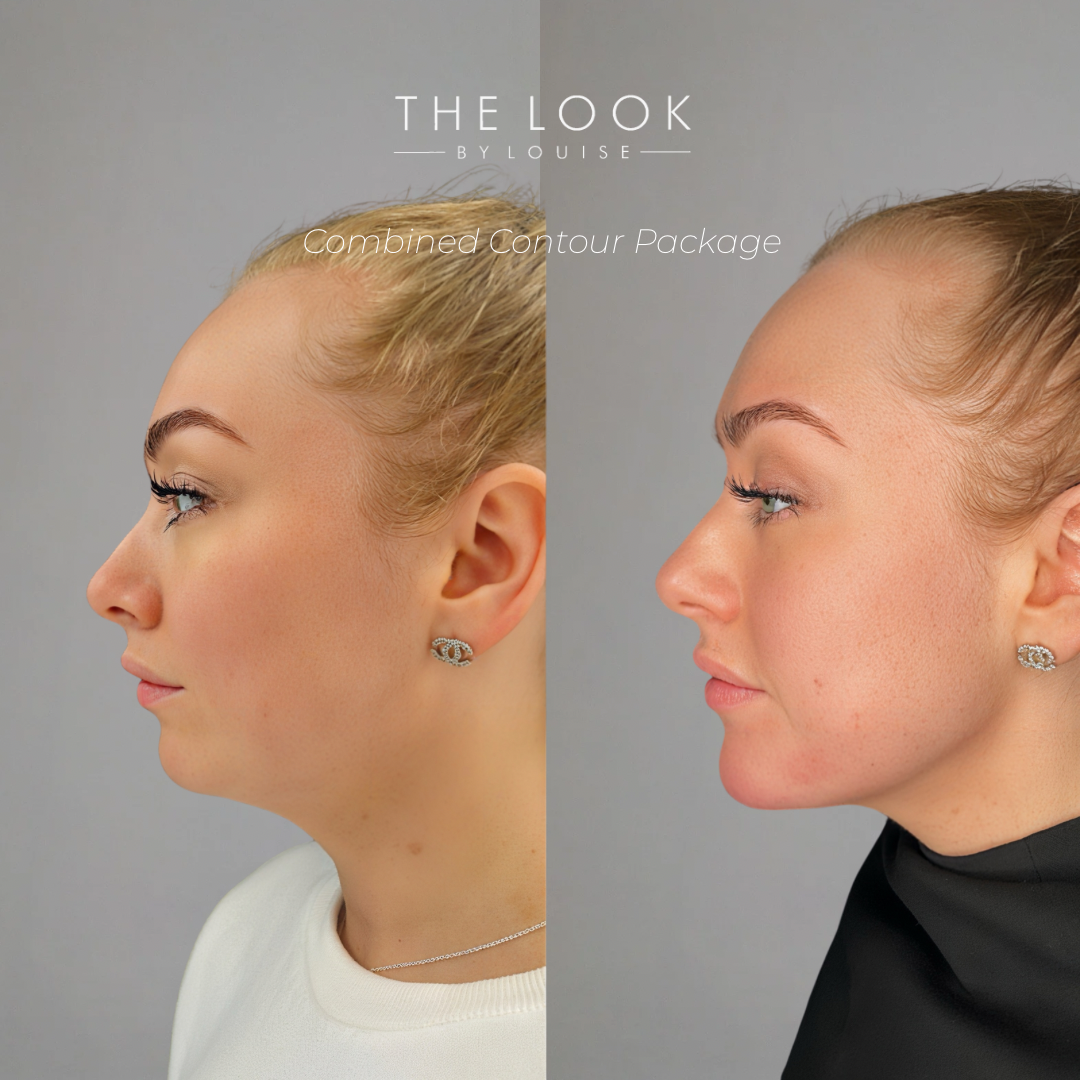
Yes — we offer our Combined Contour Package, designed to enhance overall facial structure and definition through treatment of the cheeks, chin, and jawline together.
Treating these areas collectively often creates a far more balanced and noticeable result compared to treating one area in isolation, as the lower and mid-face work closely together structurally.
Packages are priced based on the total amount of filler used, with options ranging from 1ml–7ml depending on your facial anatomy, current structure, and overall treatment goals.
For many patients who are new to dermal filler, approximately 3–4ml is typically recommended across the cheeks, chin, and jawline to create a more noticeable yet still natural-looking enhancement.
We also offer Profile Balancing treatments, combining areas such as the nose, lips, and chin to improve overall facial proportions and side profile harmony.